Jump to a section
TL;DR
Google Play does not publish a single daily review limit, but unnatural bursts still look risky. A steady review pace tied to real app usage is safer, more credible, and better for long-term conversion than short spikes.
Why velocity matters on Google Play
Google Play review velocity is not just a volume question. It is a pattern question.
App teams often focus on average rating, but buyers also notice whether reviews are fresh, specific, and still arriving. Sudden bursts can look manufactured, while a slow but steady flow usually feels more credible. That is why review velocity belongs in the same conversation as ASO, conversion, and trust.
If you need the broader acquisition side first, start with Google Play Reviews: How to Boost App Downloads in 2026. For the ranking and keyword context, pair this with ASO & Reviews: Cracking the Google Play Algorithm in 2026.
What "too fast" usually looks like
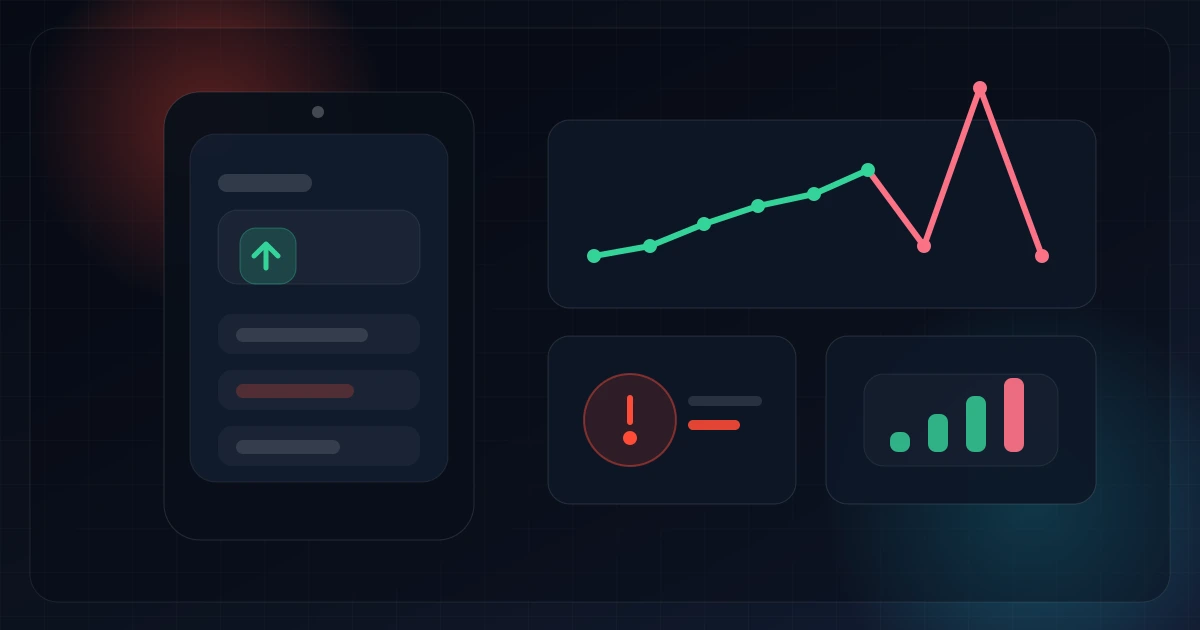
There is no public Google Play rule that says an app can only receive a certain number of reviews per day. The problem is not a magic threshold. The problem is an unnatural pattern.
Velocity starts looking risky when:
- reviews arrive in a short burst with little preceding activity,
- multiple reviews use generic or highly similar wording,
- the review mix is disconnected from current install or usage trends,
- a new app jumps from no feedback to a suspiciously polished rating profile overnight.
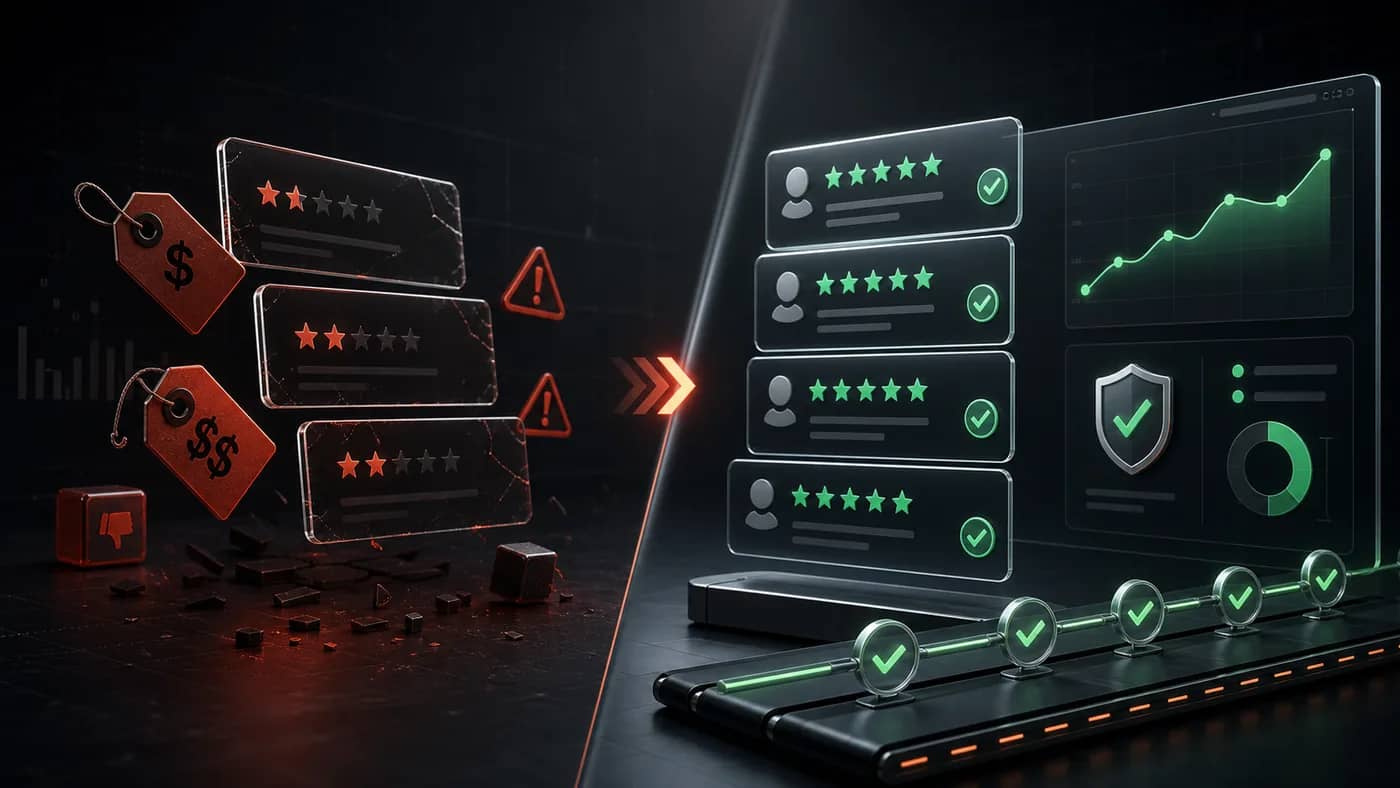
In practice, buyers can spot the same thing. A listing with stale reviews for months and then a sudden wall of short five-star ratings rarely feels organic.
That is why review pacing should be planned as an operating rhythm, not a one-week push.
Healthy velocity depends on app stage
The right pace depends on where the app is in its lifecycle.
New launch
For a new app, the first goal is not mass volume. It is credible momentum. A modest but steady stream of descriptive reviews is usually stronger than a large burst of empty praise.
Good launch signals include:
- reviews arriving from real early adopters over several days or weeks,
- comments that mention actual use cases or device experiences,
- a rating trend that matches the product's real stage of maturity.
Growth stage
Once installs are moving, the focus shifts to continuity. At this stage, review velocity should roughly track product activity. Major releases, onboarding improvements, and feature wins can increase review flow, but those spikes should still make sense relative to what the app is doing in the market.
Mature app
For mature apps, velocity becomes a maintenance system. Quiet periods are normal, but long gaps make the listing feel stale. This is where the lessons from 2026 Review Recency Benchmarks matter. Buyers trust listings that look current, not just historically strong.
The operational model that works best
App teams get into trouble when review collection is treated like a campaign instead of a product habit.
The healthier approach is:
- map the moments when users actually experience value,
- trigger prompts after those moments,
- monitor rating mix and review detail quality,
- adjust pacing if release quality dips or installs spike unevenly.
Google's in-app review flow helps, but the flow alone does not solve the strategy problem. You still need to decide when to ask, how often to ask, and which cohorts should be prompted first.
If your team needs a practical timeline, use the Review Velocity Planner. It is the cleanest way to translate rating goals into a cadence that does not look erratic.
What to monitor each month
Velocity should be reviewed with a small operating dashboard, not gut feeling.
Track:
- total new reviews in the last 7, 30, and 90 days,
- change in average rating over the same windows,
- percentage of reviews that mention real features or use cases,
- release timing versus review spikes,
- response rate to visible critical reviews.
This is also where a broader review-health framework becomes useful. If you want a cross-platform version, see Review Health Score: The Metrics You Should Track Every Month.
Common mistakes
Over-prompting after one good release
Teams often see a feature launch go well and then flood the user base with prompts. That can create a short-lived spike, but it also increases the chance of thin reviews and inconsistent sentiment.
Ignoring low-star operational feedback
Velocity is not helpful if review quality reveals product issues you are not fixing. A steady stream of current complaints can be worse than a lower review count with better sentiment.
Using one prompt for every cohort
Power users, new users, and recently reactivated users should not be treated the same. The best prompts reflect what the person just achieved in the app.
A better target than "more reviews"
The smarter target is not "get as many reviews as possible this month." It is:
- keep reviews recent,
- keep the flow believable,
- keep the wording grounded in real usage,
- keep the cadence aligned with actual product momentum.
That is how review velocity supports installs instead of raising suspicion.
For campaign planning beyond Google Play, the Resources hub connects the calculator, planner, extension, and API surfaces in one place. If your app listing already needs rating recovery math, use the TrustScore Calculator to model volume before you commit to a schedule.
Conclusion
Google Play review velocity becomes risky when it stops matching product reality. There is no single safe number, but there is a clear safe pattern: steady, recent, descriptive feedback from real users at moments that make sense.
That is the standard app teams should optimize for. When your review flow reflects real usage, it helps both conversion and listing credibility. When it becomes a bursty shortcut, it weakens both.
For service-side help, see our Google Play reviews page. For deeper workflow planning, keep the Review Velocity Planner and Resources in the same operating loop.