
Jump to a section
TL;DR
Review recency now carries real weight in both buyer trust and local visibility. BrightLocal's 2026 survey found that 74% of consumers look for reviews written within the last three months, and 44% say a review posted within the last month is an important decision factor. In practical terms, fresh reviews now do more persuasive work than a large archive of stale ones.
There was a time when a large lifetime review count could carry a profile on its own. In 2026, that is no longer enough. Buyers look at dates, not just stars, and platform interfaces increasingly surface the newest feedback first.
That does not mean old reviews are worthless. It means they no longer do the same trust-building job they once did. A business with a smaller but active review profile often looks safer than one with a larger profile that has gone quiet.
This guide is best read as an evidence-backed operating benchmark, not a claim that every platform publishes the same formal threshold. Where public research is available, it is cited. Where platform behavior is better understood through practice, the recommendation is labeled as an OrderBoosts working benchmark.
Contributor Callout
Have data, a case study, or a perspective on review management, local SEO, or AI discovery? Pitch a guest post or collaboration.
Why Review Recency Matters in 2026
The strongest public evidence comes from BrightLocal's Local Consumer Review Survey 2026. The report found that:
- 97% of consumers read reviews for local businesses.
- 74% look for reviews written within the last three months.
- 44% say a review posted within the last month is an important factor.
- 37% say the business owner's response to the review matters.
Those numbers matter because they show recency as a standalone trust signal, not just a nice extra beside rating and volume.
The discovery layer is changing too. BrightLocal also found that use of ChatGPT and other generative AI tools for local recommendations rose from 6% to 45% in a year. That does not prove that every AI system explicitly ranks businesses by review freshness. It does suggest that businesses now need public signals that make them look active, current, and credible across multiple surfaces.
Google's own Business Profile help documentation reinforces the operational side of this. Google says that replying to reviews shows customers you value their feedback, and it gives businesses direct tools such as review request links and QR codes to keep review collection moving.
OrderBoosts interpretation: in 2026, review freshness is not just a reputation metric. It is part trust signal, part activity signal, and part proof that your business is still delivering the experience older reviews describe.
Platform-by-Platform Freshness Expectations
These are working benchmarks, not official platform rules.
| Platform | OrderBoosts working freshness target | Why it matters |
|---|---|---|
| Google Business Profile | 1 new review every 1 to 2 weeks for most active local businesses | Buyers often see Google reviews first, and recent review dates plus visible owner replies help a profile look current. |
| Trustpilot | At least monthly for smaller brands, and weekly for higher-volume brands | Trust-oriented buyers scan recent experience first. A long gap can make an otherwise strong score feel dated. |
| G2 | At least one meaningful review cycle every quarter, with monthly momentum preferred for active SaaS categories | Software buyers care whether feedback reflects the current product, not last year's version. |
| Yelp | 1 to 3 new reviews per month for active local businesses | Yelp visitors are especially sensitive to signs that a listing is active and still representative. |
The right cadence depends on your customer volume, category, and platform role in the buying journey. A small B2B consultancy does not need the same pace as a busy restaurant or a consumer marketplace brand.
How Stale Reviews Affect Trust and Conversion
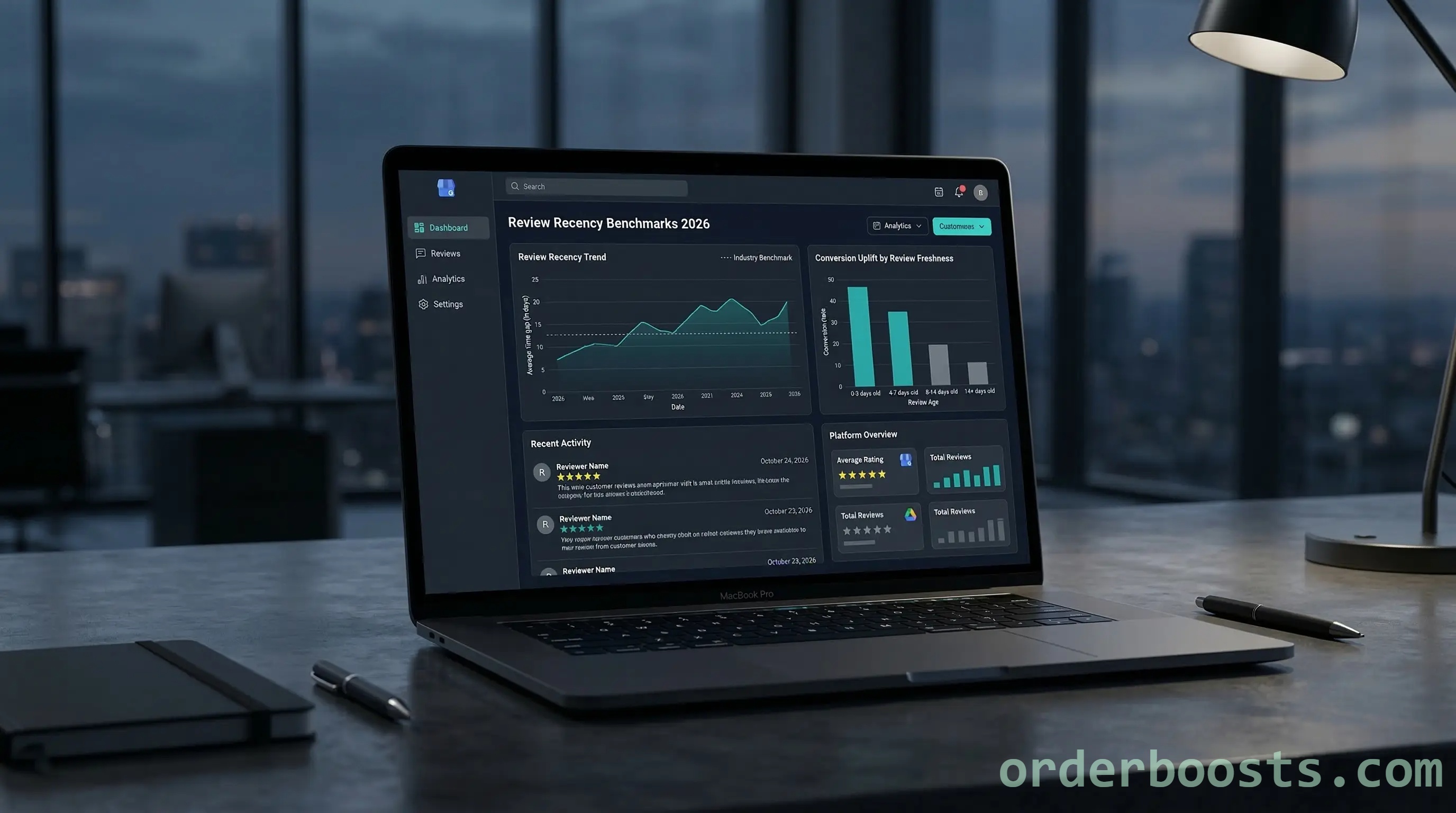
Stale reviews usually do not fail all at once. They fade. The profile still looks respectable from a distance, but confidence weakens as soon as a buyer starts checking dates.
BrightLocal's survey offers a practical way to think about that trust curve:
- Reviews from the last month carry the strongest freshness signal.
- Reviews within the last three months still matter to most buyers.
- Once the newest review is older than three months, a meaningful share of buyers start questioning whether the profile still reflects current reality.
That matters for conversion because reviews often push people into one of two paths: keep researching, or move closer to purchase. BrightLocal reports that many consumers continue researching after reading reviews rather than buying immediately. When the latest review looks old, that research instinct usually gets stronger.
OrderBoosts interpretation: stale review profiles create hesitation in three ways.
- They make buyers wonder whether your service quality has changed.
- They make competitors with fresher feedback look safer.
- They make your review count feel historical rather than current.
This is why the gap between 30 and 90 days matters so much. It is the zone where reviews are still visible, but their ability to reassure an undecided buyer starts weakening fast.
Industry-Specific Freshness Windows
Not every category operates on the same review clock.
SaaS and Software
Software changes quickly, so review staleness is more obvious. Buyers want evidence that the product still performs as described. A practical target is fresh feedback every month, with quarterly gaps treated as a warning sign. If you need to translate score goals into a realistic cadence, use the Review Velocity Planner.
Local Services
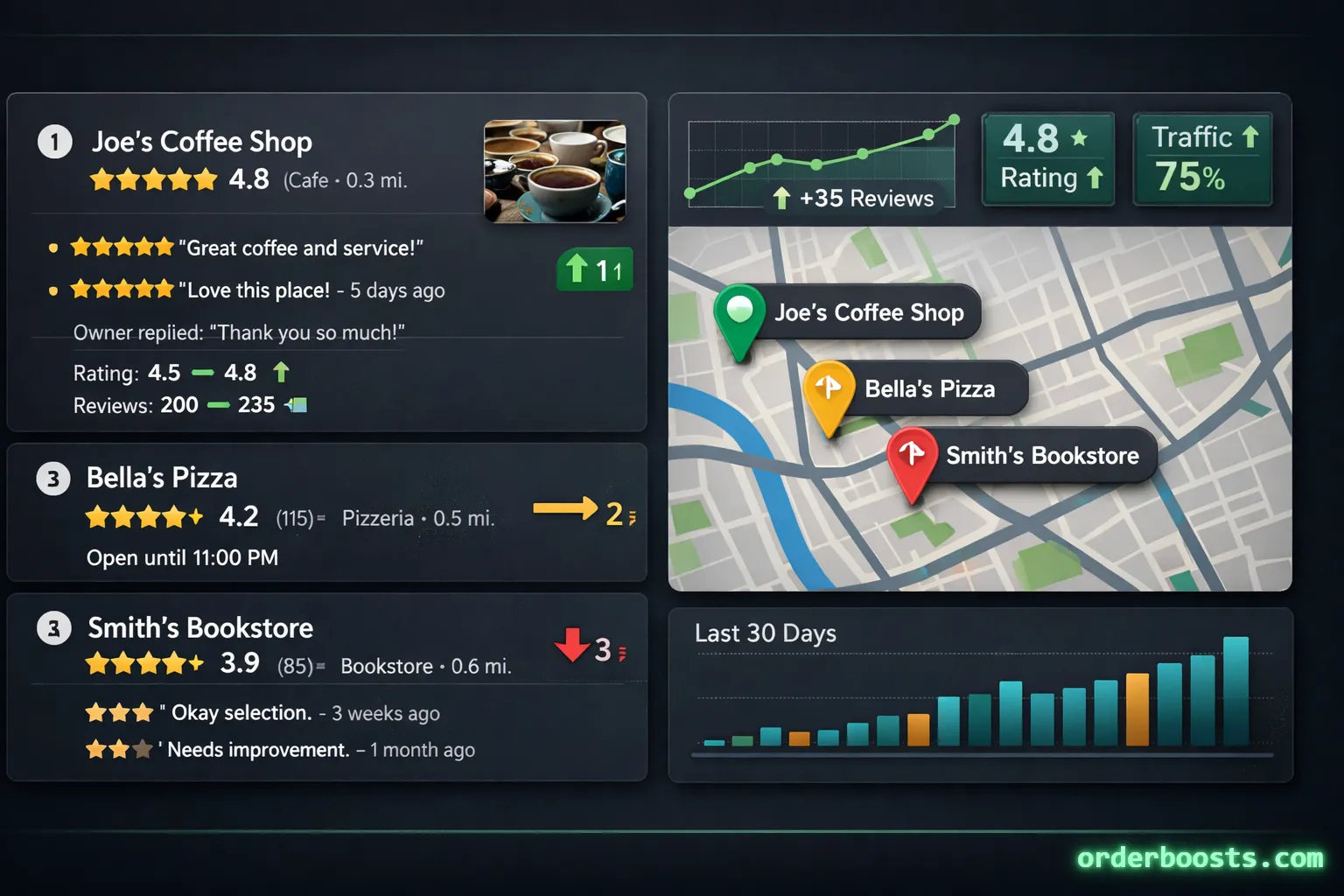
Restaurants, clinics, salons, home services, and similar businesses live in a high-recency environment. For these profiles, weekly review movement is often the safest target. This lines up with the broader local search reality covered in Local SEO and Google Reviews in 2026.
Ecommerce and DTC
Product reviews can age more slowly than service reviews, but they still lose persuasive power when there is a visible gap. Monthly freshness is a healthy baseline, with tighter cadences around launches and seasonal peaks.
Professional Services
Law firms, accountants, agencies, and consultancies usually have lower review volume. That makes quarterly movement acceptable in many cases, but a profile with no new feedback for half a year can still look stagnant.
Review Velocity and Why Consistency Matters
Review recency and review velocity are related, but they are not the same thing.
Recency asks, "How old is the newest proof?"
Velocity asks, "Does new proof arrive steadily enough to look believable?"
A profile that gets a large burst of reviews and then goes silent may still look active for a short time, but it does not build the same long-term trust as a steady cadence. Buyers notice gaps. Platforms notice uneven patterns. Internal teams also struggle to forecast outcomes when review collection happens in bursts instead of systems.
That is why the best operating model is usually a floor, not a campaign. Set the minimum cadence needed to stay fresh, then maintain it consistently.
If you are planning for Trustpilot specifically, the safest next step is not guesswork. Use the TrustScore Calculator to estimate how much ongoing review volume you actually need before you choose a cadence.
How to Build a Review Freshness System
The businesses that stay fresh do not rely on reminders or occasional campaigns. They build repeatable review collection into normal operations.
1. Map the right ask moments
Identify the points in the customer journey where value has just been delivered. For SaaS, this may be after onboarding, after a resolved support issue, or after a successful QBR. For local services, it is often right after the job is complete.
2. Automate the request
Use email, SMS, in-product prompts, and direct links so the request is timely and easy to complete. Google's review help documentation explicitly supports direct review request links and QR codes for this purpose.
3. Route demand where freshness is weakest
Do not treat every platform equally every week. If Google is fresh but Trustpilot is quiet, send the next batch there. If your G2 profile has gone a quarter without activity, shift eligible requests toward G2.
4. Respond while the review is still fresh
BrightLocal found that 89% of consumers expect business owners to respond to reviews, and 81% expect a response within a week. That makes response speed part of the freshness story, not a separate task.
5. Track one simple freshness score
At minimum, track:
- days since the most recent review on each platform
- rolling 30-day review count
- rolling 90-day review count
- response rate
- average response time
If one platform goes quiet for more than two weeks in a high-recency category, treat it as an operational alert.
How to Measure Business Impact
You do not need a complex model to prove that review freshness matters. Start with before-and-after comparisons over a 60 to 90 day window.
Track:
- age of newest review by platform
- number of new reviews in the last 30 days
- response rate and response time
- branded search clicks
- local actions such as calls, direction requests, or profile views
- form fills, demo requests, or purchases
Then compare those against your freshness improvements.
OrderBoosts interpretation: the most useful question is not "Did reviews help?" It is "What changed when our newest review went from old to current, and when our response behavior became consistent?" That keeps the analysis tied to operational improvements rather than vanity metrics.
Conclusion
Review recency is now one of the clearest signals that a business is active, trusted, and still delivering what older reviews promise. In 2026, volume still matters, but freshness carries more day-to-day persuasive power than many teams realize.
If your newest review is older than your market's comfort window, the solution is not a one-time sprint. It is a repeatable review collection and response system that keeps each important profile current.
Use this guide as a working benchmark, then adjust by platform, industry, and customer volume. The goal is not to chase a universal number. The goal is to stay visibly current where your buyers are actually looking.
Contributor Callout
Have data, a case study, or a perspective on review management, local SEO, or AI discovery? Pitch a guest post or collaboration.
For related reading, see How Trustpilot TrustScore is Calculated (2026 Formula Explained).