

Jump to a section
Introduction
TL;DR
Choose Bright Data or Oxylabs for enterprise scale, Smartproxy or IPRoyal for user-friendly budget options, and NetNut or Rayobyte for specialized ISP and ethical proxy needs.
Proxy services have become essential infrastructure for modern businesses conducting market research, competitive analysis, web scraping, ad verification, and brand protection. Whether you're a startup validating product-market fit or an enterprise managing global SEO campaigns, choosing the right proxy provider directly impacts your data quality, operational costs, and compliance posture.
The proxy market has matured significantly. What used to be a fragmented landscape of unreliable services is now dominated by professional providers offering residential, datacenter, ISP, and mobile proxies with sophisticated rotation systems, geographic targeting, and enterprise-grade support. The challenge is no longer finding a proxy service, it's finding the right one for your specific use case and budget.
This guide evaluates the top 10 proxy providers based on network size, pricing transparency, ease of use, customer support quality, and real-world performance across common business applications. We focus on providers that serve legitimate business needs, maintain ethical sourcing practices, and offer the reliability required for production environments. Whether you need residential IPs for scraping e-commerce data, datacenter proxies for SEO monitoring, or ISP proxies for social media management, this comparison will help you make an informed decision without wasting time on trial-and-error testing.
Each provider review includes pricing structure, ideal use cases, technical capabilities, and honest assessments of where they excel and where they fall short. By the end, you'll know exactly which service fits your requirements and how to get started without overpaying or compromising on quality.
#1 Bright Data - Enterprise Solution with the Largest Proxy Network

Bright Data operates the world's largest proxy network with over 72 million residential IPs, 770,000+ datacenter IPs, and coverage in every country and city globally. Originally known as Luminati, the company has evolved into a comprehensive data collection platform serving Fortune 500 companies, academic institutions, and high-growth startups that require enterprise-grade reliability and compliance.
What sets Bright Data apart is the sophistication of its infrastructure. The platform offers residential, datacenter, ISP, and mobile proxies with advanced targeting options including country, state, city, carrier, and ASN-level precision. The proprietary proxy manager tool provides a user-friendly interface for configuring rotation rules, managing sessions, and debugging connection issues without touching code. For developers, Bright Data offers robust APIs, browser extensions, and integrations with popular scraping frameworks like Puppeteer and Selenium.
Pricing operates on a pay-as-you-go model starting at $500 minimum spend, with residential proxies priced around $15 per GB and datacenter proxies significantly cheaper at $0.60 per GB. While this positions Bright Data at the premium end of the market, the value proposition is clear for businesses that need guaranteed uptime, legal compliance documentation, and dedicated account management. The company maintains strict ethical sourcing standards and provides transparency reports that matter for enterprises concerned about regulatory risk.
Bright Data excels for large-scale web scraping, ad verification, brand protection, and competitive intelligence operations where data accuracy and legal compliance are non-negotiable. The learning curve is steeper than simpler alternatives, but the platform's capabilities justify the investment for teams running production workloads. Customer support is responsive with 24/7 availability and technical expertise that goes beyond basic troubleshooting.
#2 Smartproxy - User-Friendly Platform Best for Beginners

Smartproxy has built its reputation on making proxy services accessible to users without deep technical expertise. The platform offers 55 million+ residential IPs, datacenter proxies, and ISP proxies with a dashboard designed for clarity rather than overwhelming users with advanced options. For teams new to proxy services or small businesses that need reliable infrastructure without dedicated DevOps resources, Smartproxy delivers the right balance of capability and simplicity.
The onboarding experience is notably smooth. Account setup takes minutes, the documentation is written in plain language with practical examples, and the dashboard provides clear visibility into usage, costs, and performance metrics. Smartproxy supports HTTP(S) and SOCKS5 protocols with automatic rotation, sticky sessions, and geographic targeting across 195+ locations. The Chrome extension and API integrations make it easy to route traffic through proxies without complex configuration.
Pricing starts at $12.5 per GB for residential proxies with flexible plans that scale based on usage. Unlike providers that require large minimum commitments, Smartproxy offers entry-level plans starting at $75/month for 5GB, making it accessible for startups and individual developers testing proxy-dependent workflows. Datacenter proxies start at $50/month for 100 IPs, and ISP proxies are available from $75/month for 5GB. The pricing transparency and lack of hidden fees are refreshing in a market where cost structures can be deliberately opaque.
Smartproxy works well for SEO monitoring, social media management, e-commerce price tracking, and market research projects that don't require the massive scale of enterprise providers. The network is reliable for most use cases, though users running extremely high-volume scraping operations may occasionally hit rate limits. Customer support is available 24/7 via live chat with response times typically under 5 minutes. The team is genuinely helpful rather than just reading from scripts, which matters when you're troubleshooting connection issues at 2 AM before a deadline.
#3 Oxylabs - Premium Quality with Large Proxy Pool

Oxylabs operates one of the most reliable proxy networks in the industry with over 100 million residential IPs, 2 million+ datacenter IPs, and specialized infrastructure for high-demand use cases like e-commerce scraping, travel fare aggregation, and real-time ad verification. The company positions itself as a premium alternative to Bright Data with comparable capabilities and a strong focus on customer success for mid-market and enterprise clients.
The technical infrastructure is impressive. Oxylabs maintains a 99.9% uptime SLA backed by redundant systems and real-time monitoring that automatically routes traffic away from problematic IPs. The platform offers residential, datacenter, ISP, and mobile proxies with granular targeting options including city-level precision, carrier selection, and session control. The proprietary dashboard provides detailed analytics on success rates, response times, and bandwidth consumption, giving teams the visibility needed to optimize scraping operations and troubleshoot issues before they impact production systems.
Pricing reflects the premium positioning with residential proxies starting around $15 per GB and datacenter proxies at $1.20 per IP per month. Minimum commitments typically start at $500/month, though the sales team can accommodate smaller pilots for qualified prospects. What you're paying for is reliability, compliance documentation, and support quality that goes beyond basic technical assistance. Oxylabs provides dedicated account managers, custom integration support, and proactive monitoring for enterprise accounts.
Oxylabs excels for businesses that need consistent performance across complex scraping projects, particularly in heavily protected verticals like e-commerce, travel, and real estate where target sites actively block proxy traffic. The network handles JavaScript-heavy sites, CAPTCHA challenges, and anti-bot systems more effectively than budget alternatives. Customer support is available 24/7 with technical staff who understand web scraping architecture and can help optimize your setup rather than just resetting your password. For teams where downtime costs real money, Oxylabs delivers the reliability worth paying for.
#4 IPRoyal - Budget-Friendly Residential & Datacenter Proxies
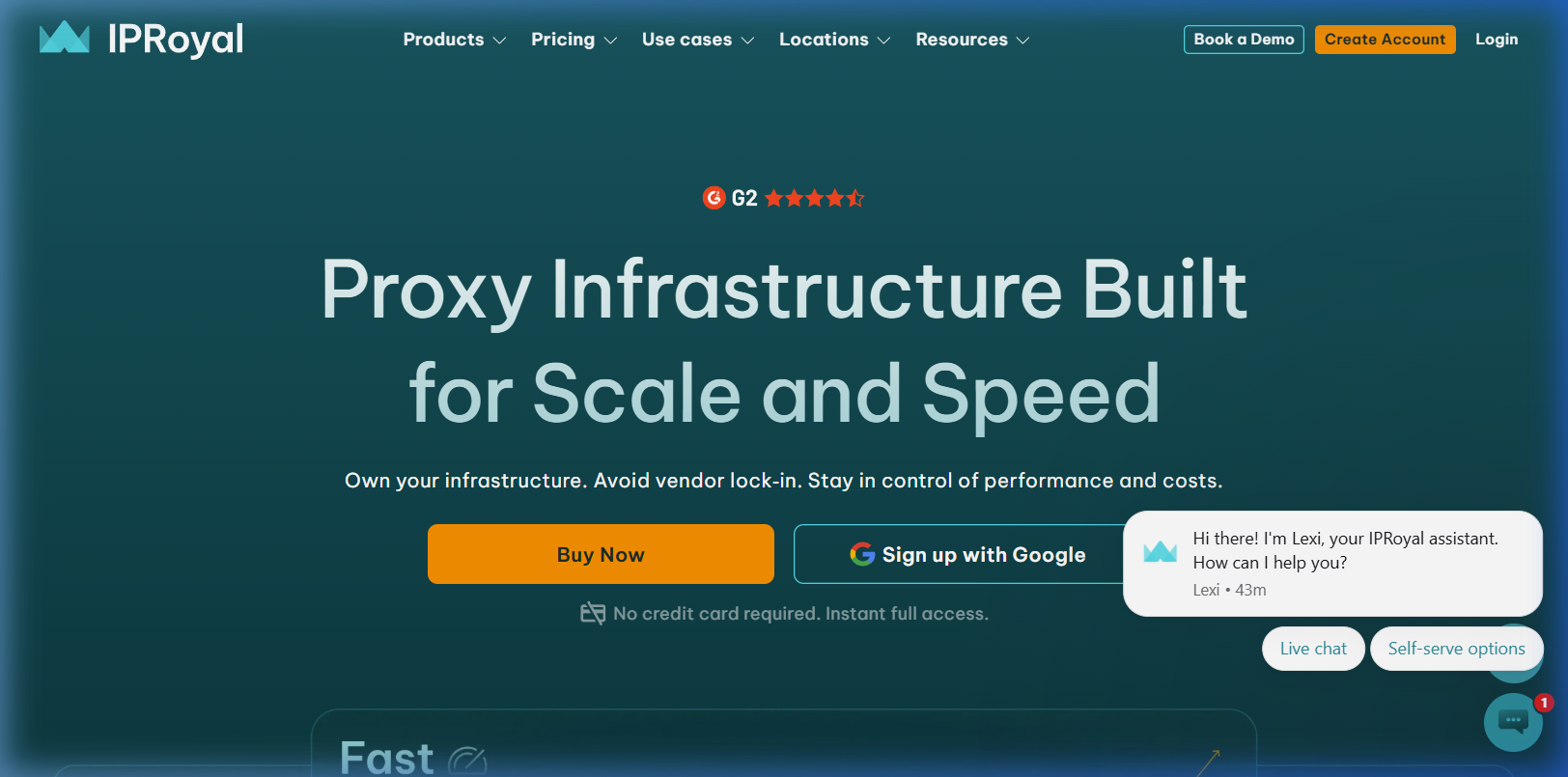
IPRoyal has carved out a strong position in the mid-market by offering legitimate proxy services at prices significantly below premium providers without sacrificing reliability for most common use cases. The network includes 8 million+ residential IPs, datacenter proxies, and ISP proxies with coverage in 195+ countries. For startups, small agencies, and individual developers who need professional infrastructure but can't justify enterprise pricing, IPRoyal delivers solid value.
The platform is straightforward to use with a clean dashboard, clear documentation, and setup processes that don't require advanced networking knowledge. IPRoyal supports HTTP(S) and SOCKS5 protocols with options for rotating and sticky sessions, geographic targeting, and unlimited concurrent connections on most plans. The service handles common scraping tasks, SEO monitoring, and social media management effectively, though you may encounter occasional IP blocks on heavily protected sites that premium providers navigate more smoothly.
Pricing is where IPRoyal stands out. Residential proxies start at $7 per GB with no minimum commitment, making it one of the most accessible entry points for teams testing proxy-dependent workflows. Datacenter proxies are available from $1.75 per proxy per month, and ISP proxies start at $1.20 per IP per month. The pay-as-you-go model means you're not locked into large contracts, and the pricing calculator on their website provides actual transparency rather than forcing you through a sales call to get a quote.
IPRoyal works well for price monitoring, market research, ad verification, and SEO tracking where you need reliable proxies but don't require the absolute highest success rates or white-glove support. The network performs consistently for most use cases, though users scraping at very high volumes or targeting the most sophisticated anti-bot systems may need to supplement with a premium provider for critical operations. Customer support is available via live chat and email with response times typically within a few hours. The team is helpful and technically competent, though you won't get the dedicated account management that comes with enterprise services.
#5 9Proxy.com - Affordable with Diverse Proxy Types and Great Value
9Proxy.com has emerged as a strong value option for businesses and developers who need access to multiple proxy types without paying premium prices. The platform offers residential, datacenter, ISP, and mobile proxies with competitive pricing and a straightforward approach that prioritizes getting users up and running quickly. The network spans 5 million+ residential IPs with coverage in 180+ countries, making it suitable for most geographic targeting requirements.
What makes 9Proxy appealing is the flexibility. You can mix and match proxy types based on specific use cases rather than being locked into a single product tier. Need datacenter proxies for SEO monitoring and residential IPs for e-commerce scraping? 9Proxy lets you manage both from a single dashboard with unified billing. The platform supports HTTP(S) and SOCKS5 protocols with automatic rotation, session persistence, and country/city-level targeting. Setup is simple with clear documentation and code examples for popular programming languages including Python, Node.js, and PHP.
Pricing is aggressive without feeling like a race to the bottom. Residential proxies start at $6 per GB, datacenter proxies at $1.50 per IP per month, and ISP proxies at $1.80 per IP per month. Plans start as low as $30/month for 5GB of residential bandwidth, making 9Proxy accessible for individual developers and small teams testing proxy-dependent projects. The billing is transparent with no hidden fees or surprise charges, and you can scale up or down based on actual usage rather than being locked into annual contracts.
9Proxy works well for market research, price monitoring, social media management, and web scraping projects where you need reliable infrastructure at a reasonable cost. The network handles most common use cases effectively, though users targeting heavily protected sites may occasionally need to retry requests or rotate IPs more frequently than with premium providers. Customer support is available via live chat and email with response times typically within 24 hours. The team is responsive and helpful for technical questions, though you won't get the proactive account management that comes with enterprise services. For the price point, 9Proxy delivers solid value for teams that need functional proxy infrastructure without enterprise budgets.
#6 Proxy-Seller - Budget Option with Good Coverage
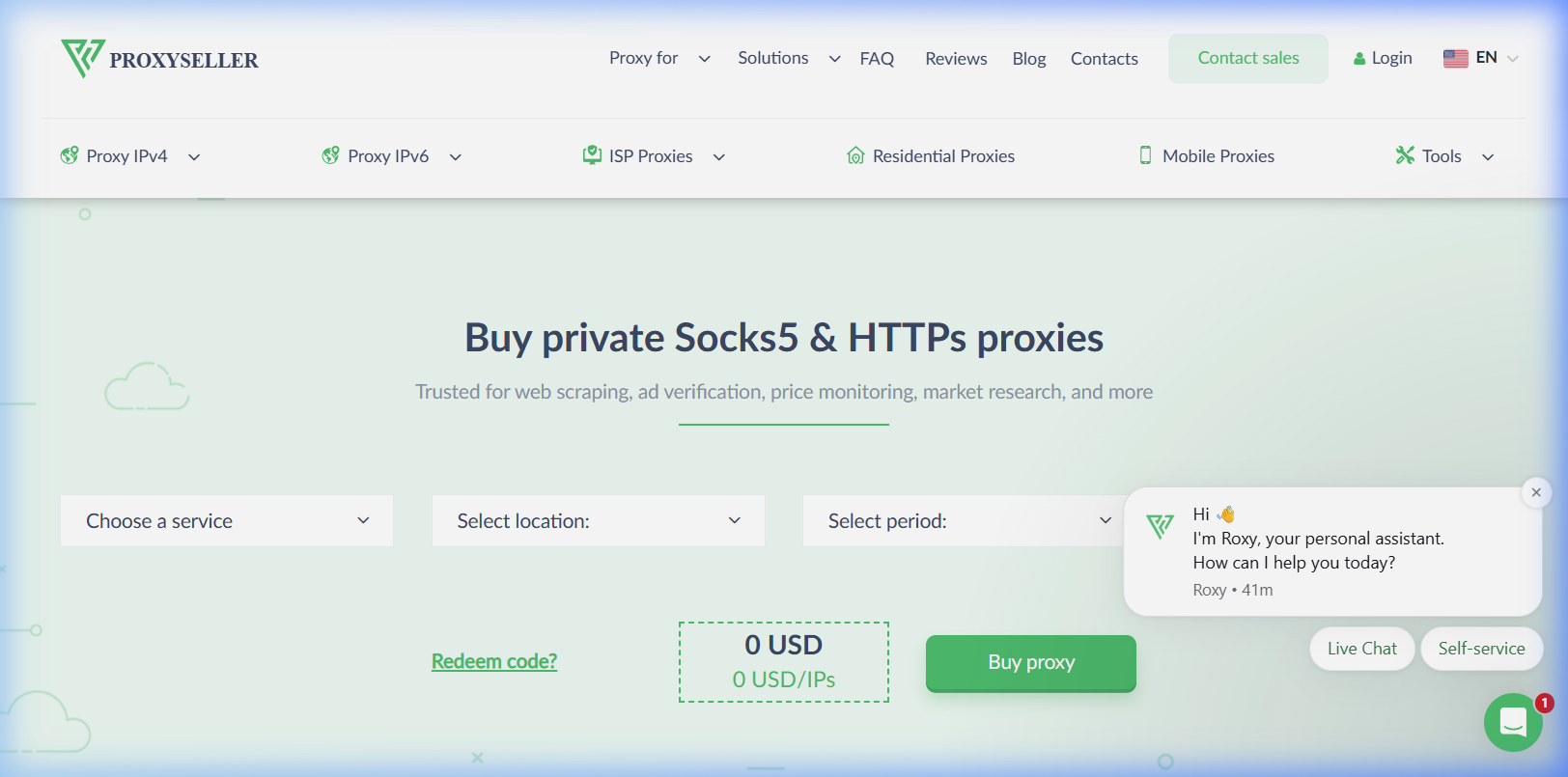
Proxy-Seller focuses on providing affordable datacenter and residential proxies with straightforward pricing and no-frills service that appeals to cost-conscious users. The platform has been operating since 2011, building a reputation for reliability in the budget segment without the marketing hype or inflated promises common in the proxy market. The network includes IPv4 and IPv6 datacenter proxies, residential IPs, and mobile proxies with coverage in 100+ countries.
The service is designed for simplicity. You select your proxy type, choose your location and quantity, and receive access credentials within minutes. Proxy-Seller supports HTTP(S) and SOCKS5 protocols with options for private dedicated proxies or shared pools depending on your use case and budget. The dashboard is basic but functional, providing the essential controls for managing your proxies without unnecessary complexity. For users who just need working proxies without advanced features like automatic rotation or sophisticated targeting, Proxy-Seller delivers exactly what's needed.
Pricing is the main draw. Datacenter proxies start at $0.80 per IP per month for IPv4 and $0.06 per IP per month for IPv6, making it one of the cheapest options for users who need dedicated IPs for SEO monitoring, social media management, or basic scraping tasks. Residential proxies are available from $5 per GB, and mobile proxies start at $50 per month for 8GB. The pricing is transparent with no hidden fees, and you can purchase proxies for periods ranging from one day to 12 months with discounts for longer commitments.
Proxy-Seller works well for users with straightforward requirements like managing multiple social media accounts, monitoring search engine rankings, or scraping sites that don't employ sophisticated anti-bot systems. The proxies are reliable for basic use cases, though you'll encounter more blocks and CAPTCHAs compared to premium providers when targeting protected sites. Customer support is available via ticket system and Telegram with response times typically within 24 hours. The team handles basic technical questions competently, though you shouldn't expect deep troubleshooting assistance or custom integration support. For users who need cheap, functional proxies and can handle basic setup themselves, Proxy-Seller offers solid value.
#7 Soax - Rotating Residential Proxies
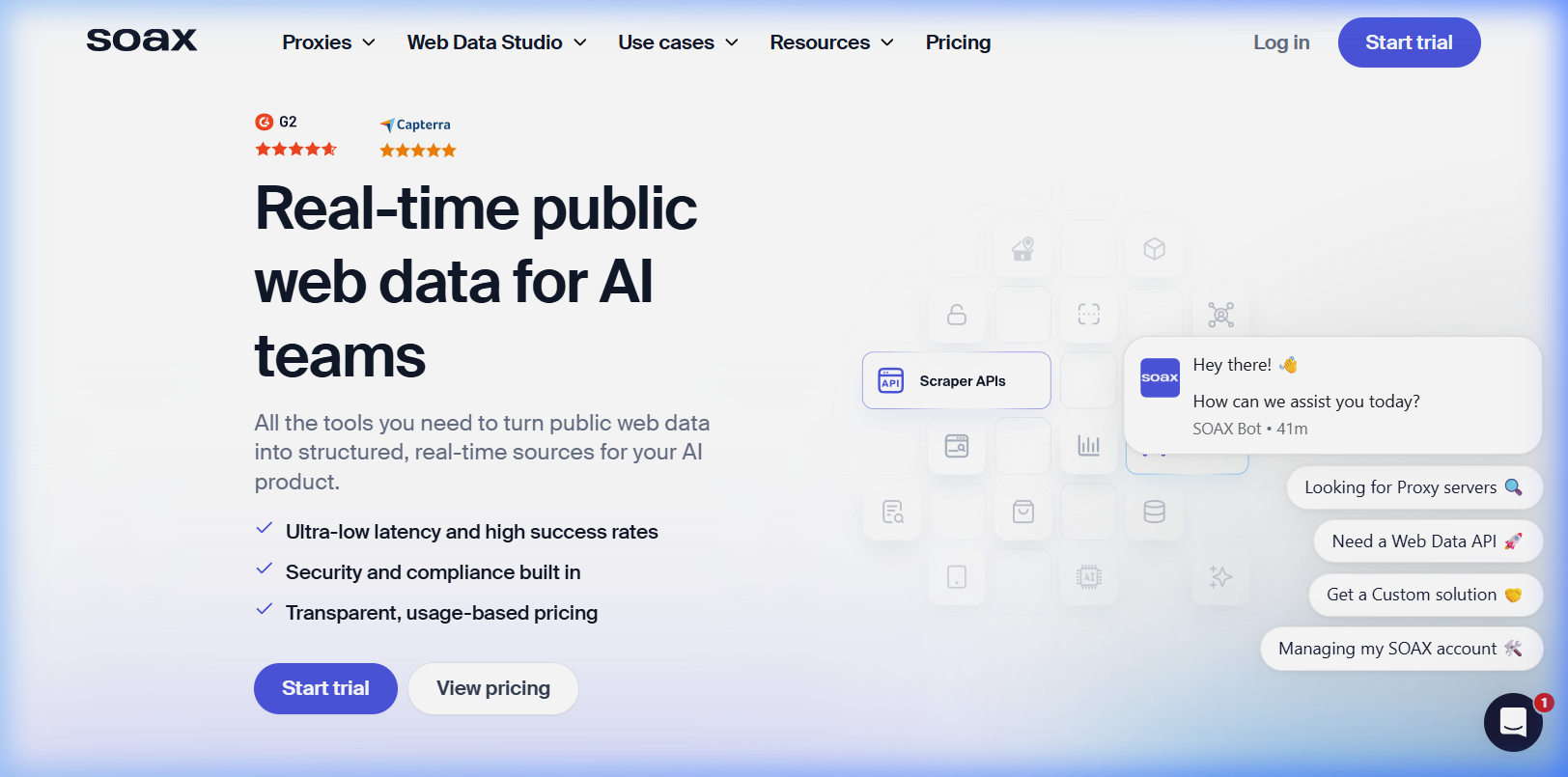
Soax specializes in residential and mobile proxies with a focus on automatic rotation and clean IP pools that maintain high success rates across demanding scraping targets. The network includes 8.5 million+ residential IPs and mobile proxies with coverage in 195+ countries. Soax positions itself as a mid-tier provider that delivers premium-quality infrastructure at prices below Bright Data and Oxylabs while maintaining higher standards than budget alternatives.
The platform's strength is its rotation system. Soax automatically manages IP rotation based on your configuration, handling session persistence, retry logic, and geographic targeting without requiring custom code. The dashboard provides real-time visibility into success rates, bandwidth consumption, and performance metrics across different target sites. For teams running scraping operations that need to maintain high success rates while avoiding detection, Soax's infrastructure handles the complexity behind a simple API. The service supports HTTP(S) and SOCKS5 protocols with flexible authentication options and integration examples for popular scraping frameworks.
Pricing starts at $99/month for 10GB of residential bandwidth with pay-as-you-go options available for larger volumes. Mobile proxies are priced at $99/month for 5GB. The pricing is competitive for the quality delivered, though not the cheapest option for users with basic requirements. What you're paying for is cleaner IP pools, better success rates on protected sites, and infrastructure that handles rotation complexity automatically. Soax offers a 3-day money-back guarantee, giving you time to test the service against your specific use cases before committing.
Soax excels for e-commerce scraping, social media automation, ad verification, and market research projects where maintaining high success rates matters more than minimizing costs. The network handles JavaScript-heavy sites and anti-bot systems more effectively than budget providers, reducing the time spent debugging failed requests. Customer support is available 24/7 via live chat with technically competent staff who understand web scraping challenges. The team can help optimize your configuration for specific targets and troubleshoot issues beyond basic connectivity problems. For teams that need reliable residential proxies without enterprise pricing, Soax delivers strong value.
#8 NetNut - Fast ISP Proxies
NetNut has built its reputation on ISP proxies that combine the speed of datacenter infrastructure with the legitimacy of residential IPs. The company operates a network of static residential proxies sourced directly from ISPs, providing IP addresses that appear as regular home connections but deliver datacenter-level performance. This makes NetNut particularly effective for use cases where speed matters and you need to maintain the same IP address across multiple requests without triggering rate limits or anti-bot systems.
The technical architecture is what sets NetNut apart. Traditional residential proxies route traffic through actual residential devices, introducing latency and reliability issues. NetNut's ISP proxies eliminate these problems by sourcing IPs directly from internet service providers, giving you static addresses that don't rotate unexpectedly while maintaining the trust signals that residential IPs provide. The network includes coverage in 50+ countries with city-level targeting and unlimited concurrent connections. The platform supports HTTP(S) and SOCKS5 protocols with straightforward authentication and integration options.
Pricing for ISP proxies starts at $300/month for 20GB with custom plans available for higher volumes. While this positions NetNut above budget providers, the value proposition is clear for use cases where performance and stability matter. The static nature of ISP proxies means you can maintain sessions across multiple requests without worrying about IP rotation breaking your workflow. This is particularly valuable for social media management, account creation, and scraping operations that require maintaining state across multiple pages.
NetNut excels for social media automation, sneaker bots, ticket purchasing, and any use case where you need fast, stable proxies that won't get flagged as datacenter IPs. The network performs consistently with success rates comparable to premium residential providers but with significantly better speed and reliability. Customer support is available via email and live chat with response times typically within a few hours. The team is technically competent and can help optimize your setup for specific use cases. For teams that need the legitimacy of residential IPs with the performance of datacenter infrastructure, NetNut's ISP proxies deliver exactly that combination.
#9 GeoSurf - Geo-Targeting Specialists
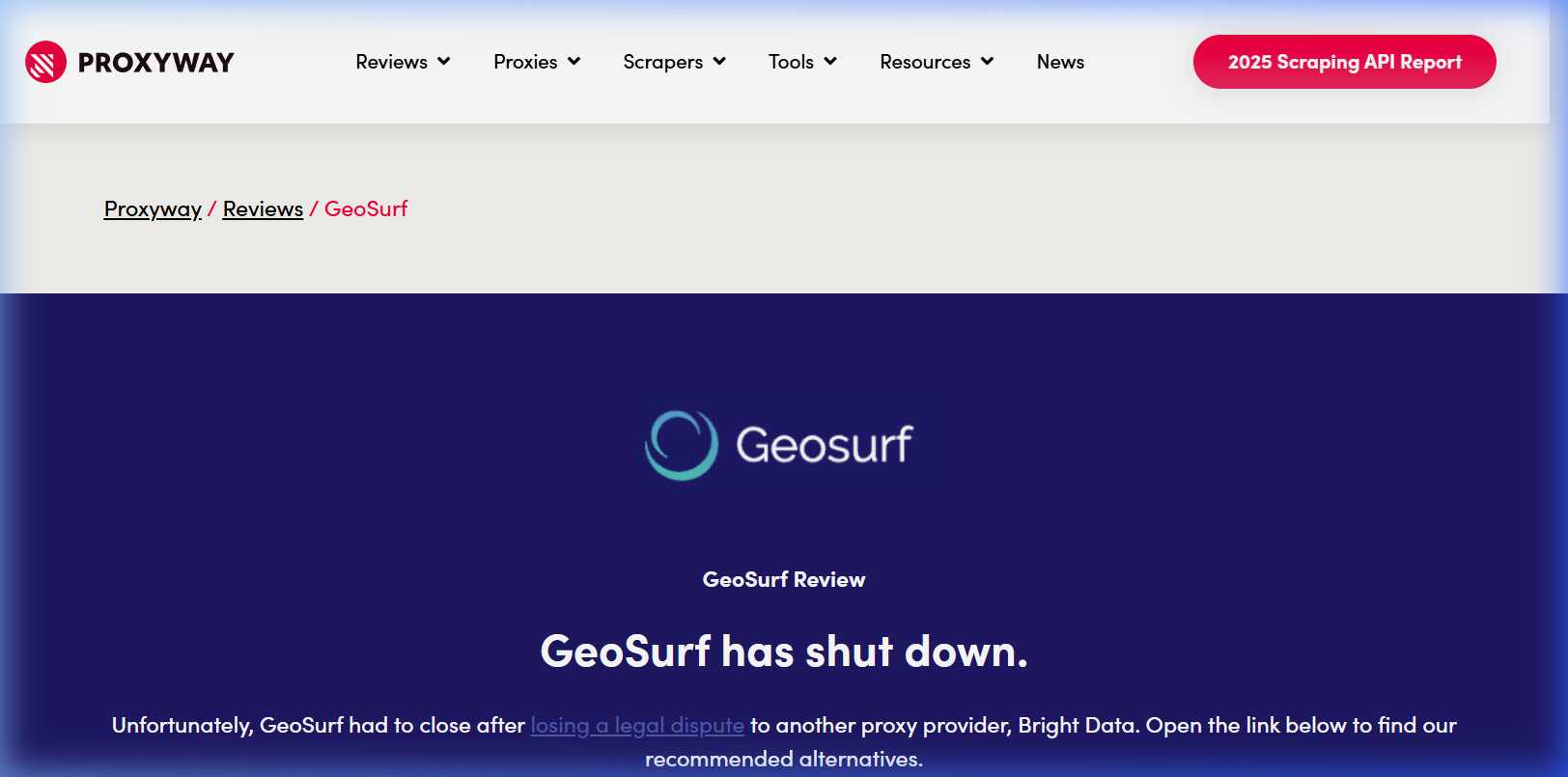
GeoSurf specializes in residential proxies with sophisticated geographic targeting capabilities that go beyond basic country selection. The platform offers 3 million+ residential IPs with coverage in 195+ countries and 1,900+ cities, making it ideal for businesses that need precise location targeting for ad verification, localized SEO monitoring, or market research across specific regions. GeoSurf has been operating since 2009, building expertise in helping businesses access geo-restricted content and verify how their digital properties appear in different markets.
The platform's strength is its targeting precision. Beyond standard country and city selection, GeoSurf offers state-level targeting in the US, carrier selection for mobile proxies, and ASN-level routing for advanced use cases. The dashboard provides clear visibility into available locations and real-time performance metrics. For businesses running localized campaigns or monitoring competitors across multiple markets, GeoSurf's infrastructure eliminates the guesswork around whether you're actually seeing results from the intended location. The service supports HTTP(S) and SOCKS5 protocols with both rotating and sticky session options.
Pricing starts at $450/month for 38GB of residential bandwidth with custom plans available for higher volumes or specific geographic requirements. The pricing is mid-tier, reflecting the specialized capabilities and quality of the network. GeoSurf offers a 7-day free trial with 250MB of bandwidth, giving you time to test the service against your specific use cases before committing. The trial is genuinely useful rather than a marketing gimmick, providing enough bandwidth to validate whether the targeting capabilities meet your requirements.
GeoSurf excels for ad verification, localized SEO monitoring, travel fare aggregation, and market research projects where accurate geographic targeting is critical. The network handles common scraping tasks reliably, though users targeting heavily protected sites may need to supplement with additional providers for the highest success rates. Customer support is available via email and live chat with response times typically within business hours. The team understands geo-targeting use cases and can help configure your setup for specific markets. For businesses that need reliable geographic targeting without enterprise complexity, GeoSurf delivers focused capabilities at reasonable prices.
#10 Rayobyte - Ethical Proxy Provider
Rayobyte, formerly known as Blazing SEO, has built its brand around ethical proxy sourcing and transparent business practices. The company operates datacenter, ISP, and residential proxies with a strong emphasis on compliance, user consent, and sustainable infrastructure. For businesses concerned about the legal and ethical implications of proxy usage, Rayobyte provides clear documentation about sourcing practices and maintains strict standards that reduce regulatory risk.
The network includes 300,000+ datacenter IPs, ISP proxies, and residential IPs with coverage in 130+ countries. Rayobyte's infrastructure is reliable and well-maintained with 99.9% uptime and responsive technical support. The platform supports HTTP(S) and SOCKS5 protocols with options for rotating and static IPs depending on your use case. The dashboard is functional and straightforward, providing the essential controls for managing proxies without unnecessary complexity. What sets Rayobyte apart is not cutting-edge features but rather the peace of mind that comes from working with a provider that prioritizes ethical operations.
Pricing is competitive with datacenter proxies starting at $1.50 per IP per month, ISP proxies at $2.50 per IP per month, and residential proxies at $10 per GB. The pricing is transparent with no hidden fees, and Rayobyte offers flexible billing options including monthly and annual plans with discounts for longer commitments. The company provides a 3-day money-back guarantee, giving you time to test the service before fully committing.
Rayobyte works well for SEO monitoring, brand protection, market research, and web scraping projects where ethical sourcing and compliance documentation matter. The network performs reliably for most common use cases, though users targeting the most sophisticated anti-bot systems may need to supplement with premium providers for critical operations. Customer support is available via live chat and email with response times typically within a few hours. The team is knowledgeable and helpful, providing technical assistance that goes beyond basic troubleshooting. For businesses that need reliable proxy infrastructure with clear ethical standards, Rayobyte delivers exactly that combination.
Business Use Cases for Proxy Services
Proxy services enable a wide range of legitimate business operations that require accessing web content from multiple locations or at scale without triggering rate limits or anti-bot systems. Understanding which use cases justify the investment helps you select the right provider and proxy type for your specific requirements.
Competitive Intelligence and Market Research: Businesses use proxies to monitor competitor pricing, product availability, and marketing strategies across different markets without revealing their identity. E-commerce companies track how competitors adjust prices based on location, time of day, and inventory levels. This intelligence informs pricing strategies, product positioning, and market entry decisions. Residential proxies work best for this use case since they appear as regular consumer traffic and avoid detection by anti-scraping systems.
SEO Monitoring and Rank Tracking: Digital marketing agencies and in-house SEO teams use proxies to check search engine rankings across different locations without personalization affecting results. Since Google and other search engines customize results based on location and search history, proxies provide the only way to see actual rankings for specific keywords in specific markets. For more on local SEO strategies, see our local SEO guide. Datacenter proxies are typically sufficient for SEO monitoring since search engines don't aggressively block this type of traffic when used responsibly.
Ad Verification: Advertisers and agencies use proxies to verify that their ads appear correctly in different markets, aren't being served alongside inappropriate content, and aren't being fraudulently clicked by bots. Ad verification requires residential proxies since ad networks actively detect and block datacenter IPs to prevent fraud. The ability to target specific cities and carriers is critical for verifying localized campaigns.
Brand Protection: Companies use proxies to monitor unauthorized sellers, counterfeit products, and trademark violations across e-commerce platforms and marketplaces. Brand protection teams need to access sites from multiple locations to identify regional variations in unauthorized activity. This ties into broader reputation management strategies. Residential proxies are essential since marketplaces actively block datacenter IPs to prevent automated monitoring.
Social Media Management: Agencies managing multiple client accounts use proxies to avoid triggering security systems that flag multiple logins from the same IP address. ISP proxies work particularly well for this use case since they provide static IPs that don't rotate unexpectedly while maintaining the legitimacy of residential connections. This prevents account suspensions and security challenges that disrupt workflow. For review management across platforms, check our social media review strategies.
Web Scraping and Data Collection: Businesses across industries use proxies to collect public data at scale for machine learning, market analysis, and business intelligence. Whether scraping product catalogs, real estate listings, or job postings, proxies enable accessing data without hitting rate limits or getting blocked. The proxy type depends on the target site's sophistication, with residential proxies required for heavily protected sites and datacenter proxies sufficient for less restrictive targets.
Travel Fare Aggregation: Travel companies and comparison sites use proxies to collect pricing data from airlines, hotels, and booking platforms that adjust prices based on user location and browsing history. Residential proxies are essential since travel sites actively block datacenter IPs and employ sophisticated anti-bot systems. The ability to target specific countries and cities is critical for accurate fare comparison.
How to Choose the Right Proxy Provider
Selecting the right proxy provider requires matching your specific use case, technical requirements, and budget to the capabilities and pricing of available options. Start by defining your requirements clearly before evaluating providers.
Identify Your Use Case: Different applications require different proxy types. SEO monitoring and basic scraping work fine with datacenter proxies. E-commerce scraping, ad verification, and social media management require residential or ISP proxies. If you're targeting heavily protected sites like major retailers or travel platforms, you'll need premium residential proxies with high success rates. If you're monitoring search rankings or scraping less restrictive sites, budget datacenter proxies will work fine.
Determine Your Geographic Requirements: If you need to access content or verify ads in specific cities or regions, prioritize providers with granular targeting capabilities. If country-level targeting is sufficient, you have more options. Consider whether you need static IPs that maintain the same address across sessions or rotating IPs that change with each request.
Evaluate Your Volume and Budget: Calculate your expected monthly bandwidth or IP requirements and compare pricing across providers. Pay attention to minimum commitments, overage charges, and whether pricing is per GB, per IP, or per request. For low-volume testing, choose providers with low minimums and pay-as-you-go options. For production workloads, negotiate volume discounts and annual contracts.
Assess Technical Requirements: Consider whether you need advanced features like automatic rotation, session persistence, API access, or integration with specific scraping frameworks. If you have limited technical resources, prioritize providers with user-friendly dashboards and good documentation. If you have experienced developers, you can work with more complex platforms that offer greater control.
Test Before Committing: Use free trials or money-back guarantees to test providers against your actual use cases before signing annual contracts. Measure success rates, speed, and reliability with your specific targets. A provider that works great for one use case may perform poorly for another, so real-world testing is essential.
Conclusion
The right proxy provider depends entirely on your specific use case, technical requirements, and budget. Enterprise teams running mission-critical operations should invest in Bright Data or Oxylabs for guaranteed reliability and compliance. Startups and small businesses get excellent value from Smartproxy, IPRoyal, or 9Proxy.com without sacrificing essential capabilities. Teams focused on social media management or use cases requiring static IPs should evaluate NetNut's ISP proxies. Businesses concerned about ethical sourcing and compliance should consider Rayobyte.
The proxy market has matured to the point where you can find reliable infrastructure at almost any price point. The key is matching your requirements to provider capabilities rather than defaulting to the most expensive or cheapest option. Start with a clear understanding of what you're trying to accomplish, test providers against your actual use cases, and scale up once you've validated performance.
If you're building data collection infrastructure or need help optimizing your proxy setup for specific use cases, reach out to OrderBoosts. We help businesses design and implement reliable data collection systems that balance cost, performance, and compliance requirements.