Jump to a section
Introduction
TL;DR
Strategies for travel and hospitality brands to secure post-stay feedback, handle negative reviews gracefully, understand the TripAdvisor Popularity Index, and ethically boost TripAdvisor standings.
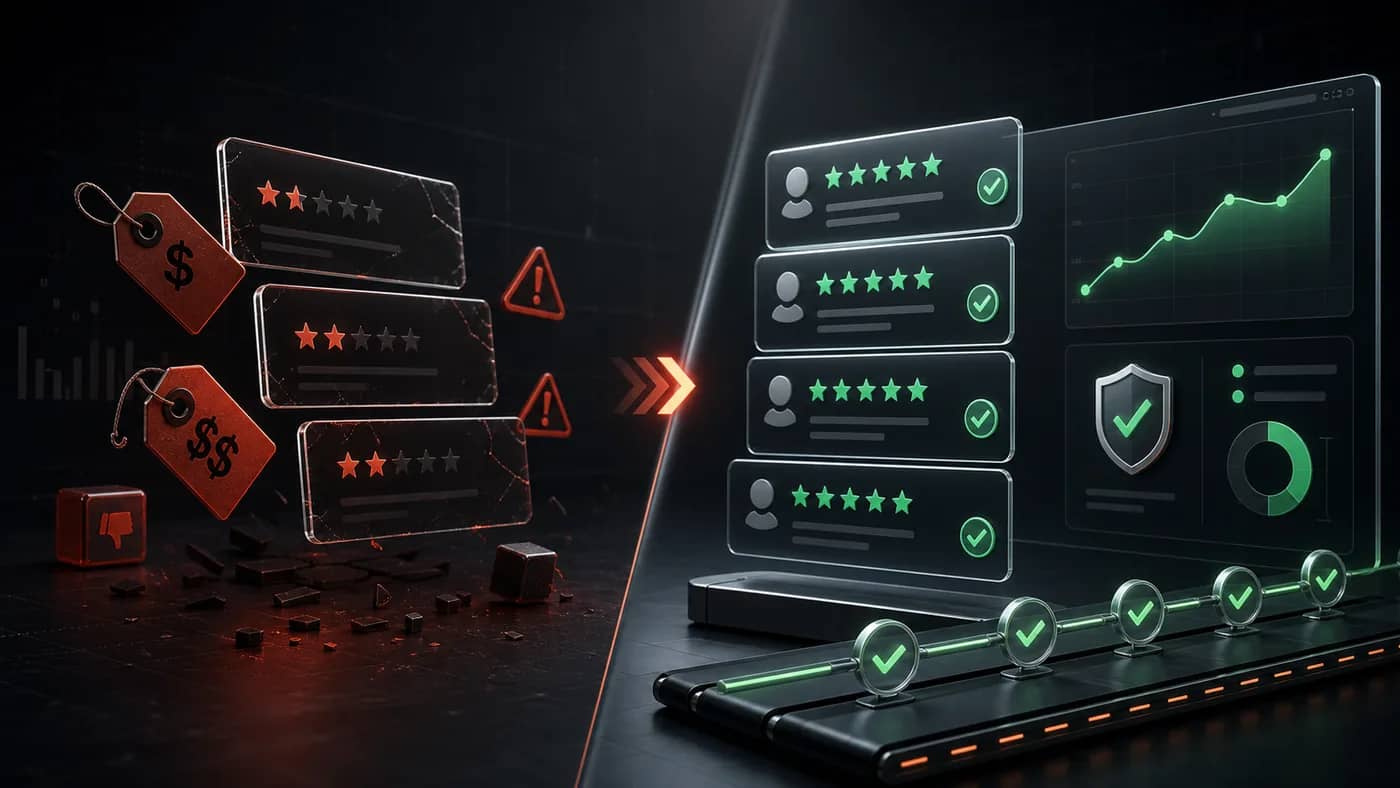
The travel industry is unique: your product is an "experience," and customers buy it before they try it. This makes trust the only currency that matters. 93% of travelers check reviews before booking a hotel, and that number climbs to 97% for independent properties without major brand recognition. If your TripAdvisor reputation is shaky, your bookings will be too. The hospitality brands winning in 2026 are not just delivering great stays — they are systematically converting those great stays into visible, credible social proof.
The same trust dynamic applies beyond hotels: couples comparing wedding venues Auckland often rely on recent reviews, photos, and venue reputation before booking a viewing.

Post-Stay Engagement
The best time to get a review is immediately after the experience, while the emotional memory is still vivid. Most hotels wait too long — or do not ask at all.
The "Golden Window": Send a personalized email 24–48 hours after checkout. Not at checkout. Not a week later. The guest is home, reminiscing about the trip, and still emotionally connected to the experience.
Subject line strategy matters more than most operators realize:
- "How was your stay in Paris?" outperforms generic survey prompts by 2–3x in open rates
- Mentioning the guest's name and a specific detail from their stay ("We hope your anniversary dinner was everything you hoped for") converts at 40% higher rates than templated messages
- A single direct CTA link to your TripAdvisor review form — no survey, no hoops — dramatically reduces drop-off
QR codes at checkout: Place a small card at the front desk and in the room with a QR code linking directly to your TripAdvisor review page. Staff who mention the card at checkout ("It would mean a lot to us if you shared your experience") see conversion rates of 15–20% — higher than any digital channel.
Multi-step cadence: If the first email gets no response, a single follow-up at day 5–7 captures another 10–15% of reviewers who intended to write one but forgot. Do not send more than two requests per stay.

Handling Negative Reviews
You can't please everyone. But you can please the people reading the negative review — which is often far more important than the original complaint.
A well-crafted public response demonstrates professionalism, accountability, and operational quality to every future guest reading it. Use this three-part structure:
- Acknowledge without defensiveness: "We're genuinely sorry your stay fell short of the experience we work hard to deliver." Avoid phrases like "we're sorry you feel that way" which read as dismissive.
- Explain with context, not excuses: "We had an unexpected boiler issue that is now fully resolved and we've implemented a backup system." Showing you've acted on the problem transforms a negative into a trust signal.
- Invite back with a direct offer: "Please contact us directly at [email] and we'd like to make this right with a discount on your next stay." Moving the conversation off-platform demonstrates sincerity and prevents a back-and-forth public thread.
Aim to respond to every negative review within 24 hours. Properties with consistent, professional negative review responses score higher in traveler trust surveys than properties with higher average ratings but no responses.
Fighting Fake Reviews
Competitors play dirty. A coordinated fake review attack can drop your rating by 0.5 stars in a single week and push you off the first page of local results. If you spot a review that violates TripAdvisor's guidelines — posted by someone who was never a guest, contains language from a competitor, or is geographically impossible — report it immediately via the Management Center.
Be specific in your report: note the review date, explain why it is implausible (e.g., your property was closed for renovation during that period), and include any corroborating details. Vague reports are deprioritized. TripAdvisor removes around 10–15% of reported reviews, but the removal rate climbs significantly when reports include concrete evidence.
Build an ongoing monitoring process: set a Google Alert for your property name and check TripAdvisor weekly for anomalous review clusters (five 1-star reviews on the same day from accounts with no prior review history is a clear signal).
The TripAdvisor Popularity Index
TripAdvisor's Popularity Index is the ranking system that determines where your property appears in destination-level search results — "Hotels in Rome," "Best restaurants in Kyoto." Understanding what actually moves the needle here is essential for any serious hospitality operator.
The Popularity Index is driven by three primary factors:
- Recency: Reviews posted in the last 12 months carry significantly more weight than older reviews. A property with 50 reviews in the past year will outrank a property with 500 older reviews and only 10 recent ones.
- Consistency: A steady, regular cadence of reviews (2–4 per month) outperforms irregular bursts (20 reviews in one week, then nothing for three months). TripAdvisor's algorithm is explicitly designed to favor organic, sustained review patterns.
- Quality: Longer, more detailed reviews with specific mentions of your property's features carry more weight than single-sentence ratings. Encouraging guests to describe specific experiences ("the breakfast buffet," "the concierge arranged our tour") produces reviews that score higher in TripAdvisor's quality algorithm.
Properties that understand and optimize for the Popularity Index treat review generation as an ongoing operational function — not a campaign they run once a year before peak season.
Using Boosts Strategically
Sometimes you need a jumpstart, especially during a competitive peak season or after recovering from an unfair review attack. Buying high-quality TripAdvisor reviews can:
- Push negative reviews off the first page, restoring the perception new visitors encounter.
- Re-ignite the "Recency" signal in the TripAdvisor Popularity Index after a quiet period.
- Increase your visibility in "Best of" lists and destination-level rankings.
The key is using this strategically rather than as a substitute for genuine reputation management. Boosts work best when they supplement a strong ongoing review program, not replace it. Check out our TripAdvisor packages designed specifically for hospitality brands.
Conclusion
Reputation management is a 24/7 operational discipline. It requires consistent monitoring, professional responses, proactive review solicitation, and the strategic judgment to know when to accelerate. In the competitive travel market, your TripAdvisor ranking is not a vanity metric — it is a direct revenue driver. Properties that treat their review program as infrastructure rather than marketing see compounding improvements in both ranking and booking volume over time. Start with the post-stay email cadence, build the response discipline, and watch the Popularity Index follow.
For related reading, see TripAdvisor Reviews: How to Improve Your Ranking in 2026 and How to Respond to Negative Reviews.